
Archival Speculations: Artistic Research and Transmedia Practice
Salzburg International Summer Academy of Fine Arts 2026
July 20–31, 2026
Course Premise
Archives are not merely repositories of the past. They are active sites where memories, histories, desires, and futures are negotiated. This course approaches the archive simultaneously as material, method, and artistic strategy. Participants will explore archival practices in contemporary art while activating personal and collective archives through experimental transmedia processes.
Working across photography, film, video, sound, text, performance, installation, and digital media, students will develop individual projects that ultimately converge into a collective multimedia installation. The course combines artistic research, critical reflection, technical experimentation, and collaborative exhibition-making.
WEEK 1
Mapping the Archive
Session 1 — July 20
Introduction: Artistic Research and the Archive
Topics:
- Introduction of participants
- Course structure and expectations
- What is artistic research?
- What is an archive?
- The archive as process rather than repository
- Critical artistic research as transmedia practice
Activities:
- Introduction to the space
- Presentation of participants’ practices
- Archival mapping exercise
- Collective discussion
Output:
- Initial archive inventory
- Research questions
References:
Harun Farocki films:
- Workers Leaving the Factory (1995)
- Images of the World and the Inscription of War (1989)
- As you see (1986)
Session 2 — July 21
Archival Practices in Contemporary Art
Topics:
- Archive as intervention
- Archive as fiction
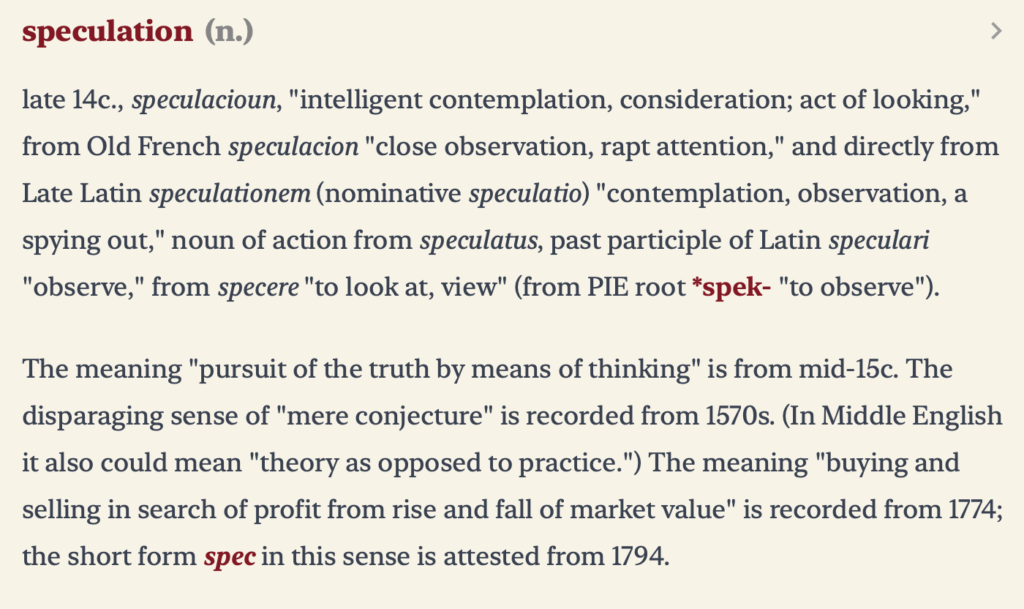
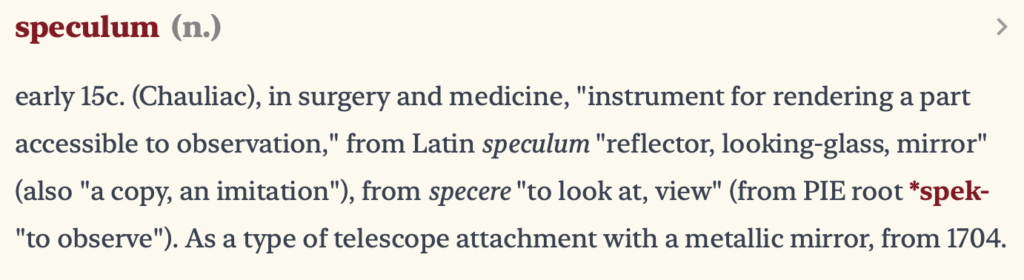
- Archive as speculation
- Contemporary artistic references
Artists:
- Harun Farocki
- Walid Raad
- Susan Hiller
- Akram Zaatari
- Forensic Architecture
- Hito Steyerl
- Christian Kosmas Mayer
- Pablo Martínez-Zárate
Activities:
- Case-study discussions
- Speculative archive exercise
Output:
- Preliminary project proposal
Session 3 — July 22
Personal Archives: Narratives and Materialities
Topics:
- Reading personal archives
- Family archives
- Institutional archives
- Found materials
- Material qualities of media
Activities:
- Archive excavation workshop
- Narrative mapping
Output:
- Identification of key materials
- First project sketches
Session 4 — July 23
The Body and the Archive
Topics:
- Embodied memory
- Performance and archival activation
- Oral histories
- The body as archive
Artists:
- Rebecca Schneider
- Tania Bruguera
- La Pocha Nostra
- Marina Abramović
- Coco Fusco
- Aura Arreola + Pablo MZ
Activities:
- Performative exercises
- Memory activation exercises
- Recording sessions
Output:
- Performative component proposals
Session 5 — July 24
Project Development and Installation Planning
Topics:
- Individual consultations
- Exhibition thinking
- Spatial narratives
- Installation formats
Activities:
- Studio work
- Collective review
Output:
- Project roadmap
- Technical requirements sheet
Session 6 — July 25
Independent Production Day
No formal class.
Participants work independently on:
- filming
- recording
- editing
- collecting materials
- developing prototypes
Optional individual consultations.
July 26
Rest Day
WEEK 2
Activating the Archive
Session 7 — July 27
Aesthetics and Ethics of the Archive
Topics:
- Ownership
- Representation
- Testimony
- Absence and erasure
- Care and responsibility
Readings:
- Nicole Sealy, The Ferguson Report (fragment)
- Christina Sharpe, Ordinary Notes
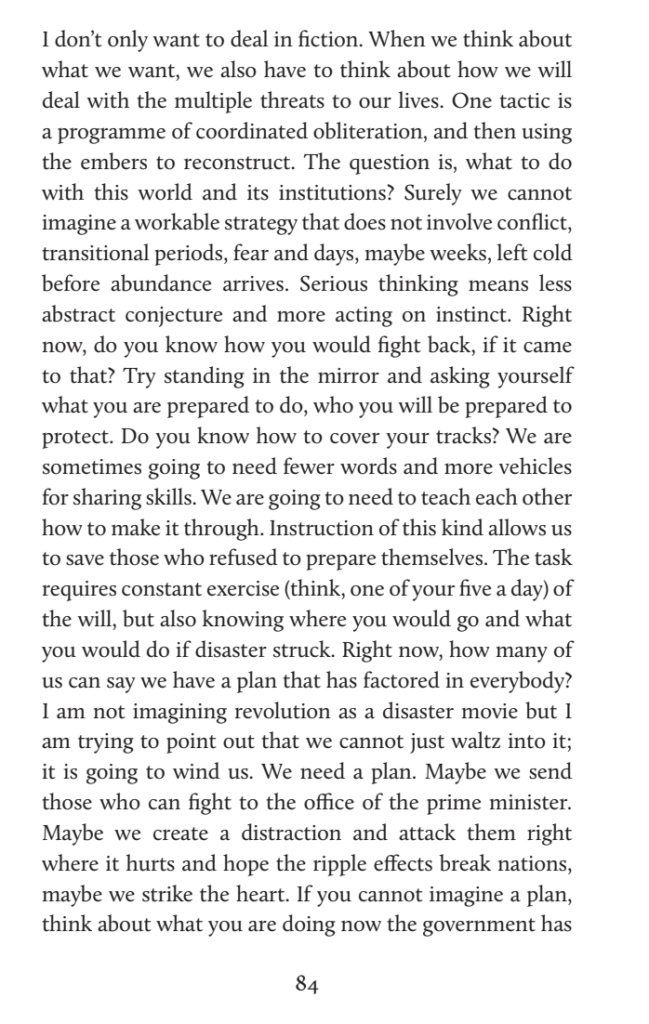
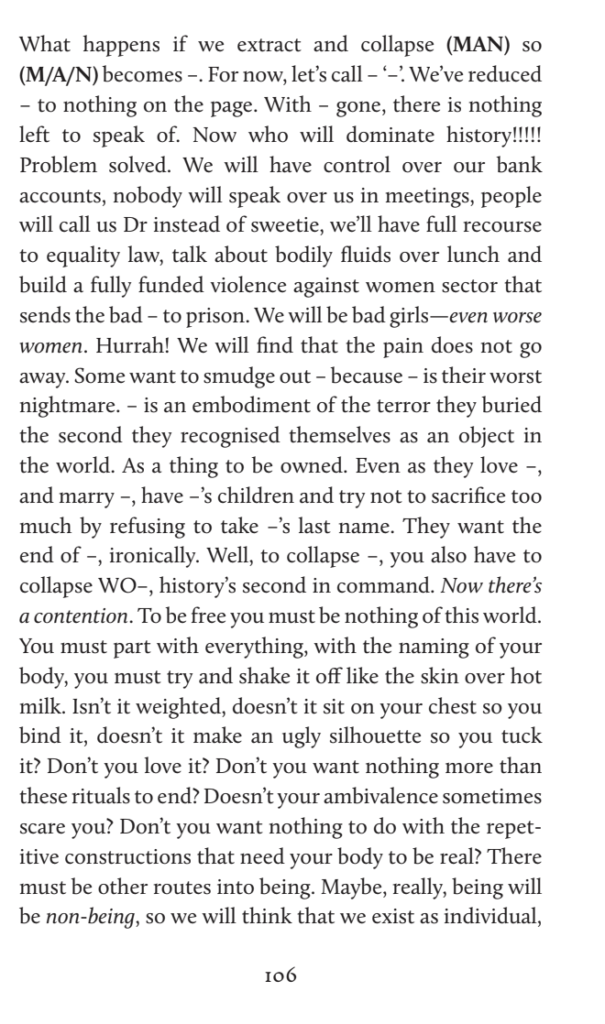
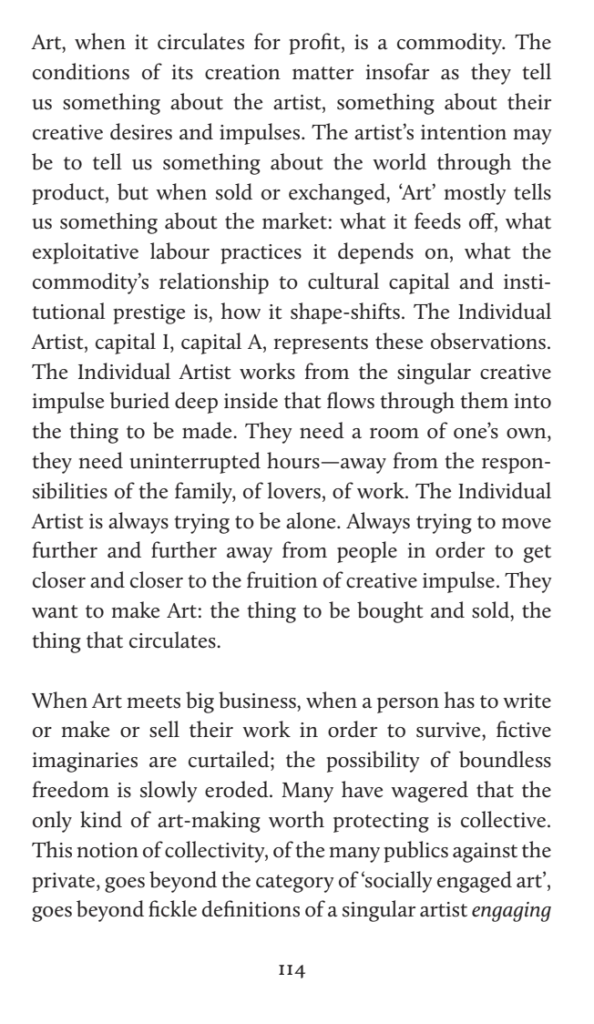
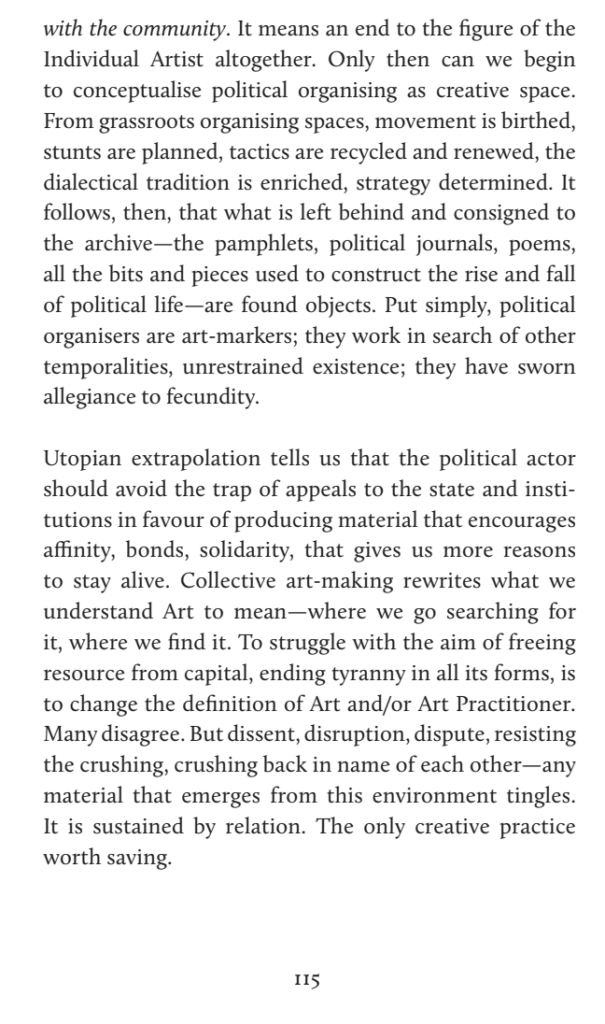
- Lola Olufemi, Experiments in imagining otherwise
Activities:
- Seminar discussion
- Final project review
Output:
- Final production plan
Session 8 — July 28
Production Studio
Topics:
- Technical troubleshooting
- Installation design
- Spatial relationships
Activities:
- Studio production
- One-on-one mentoring
Output:
- Advanced project prototypes
Session 9 — July 29
Collective Installation Production
Topics:
- Collective authorship
- Relations between works
- Exhibition dramaturgy
Activities:
- Fabrication
- Testing projections, sound, objects
Output:
- Installation components completed
Session 10 — July 30
Exhibition Assembly
Topics:
- Display strategies
- Spatial composition
- Light, sound, and movement
Activities:
- Rearrangement of the space
- Installation of works
- Final testing
Output:
- Collective exhibition completed
Session 11 — July 31
Open Studio and Closing Session
Activities:
- Open studio presentation
- Collective walkthrough
- Reflection circle
- Documentation of projects
Questions:
- What can archives do?
- How has the project transformed?
- What remains unresolved?
Final Output:
A collective multimedia installation composed of individual and collaborative works developed through archival research and transmedia experimentation.
COURSE MATERIALS
Introduction: Artistic Research and the Archive

“In recent years, I have a hard time judging all these digital images and all these codecs that are coming up. I don’t know what to say about colour correction, because it no longer looks like a photographic image, it’s more like a chalk painting, it has no luminiscence. So there are a lot of changes that have confused me in my aesthetic judgment about how I would like to have an image or whatever. But that’s also liberating, because you must question your standards again, and that is what I’m trying to do” HF, 2014


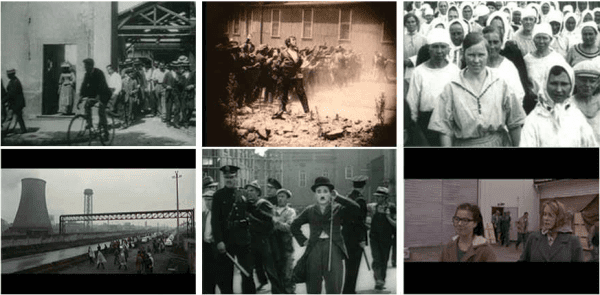

“While I was looking for a way to order my collection of material , I thought of the dictionaries, which provide chronological evidence of the usage of a word or expression and then I noticed that there’s nothing that could correspond to a dictionary for film. What should it be called, this thing I was missing? One could ca ll it an “image book”, one could perhaps call it a “thesaurus” or an “image treasury”. one could al so perhaps call it an “archive for cinematic expressions”.” HF
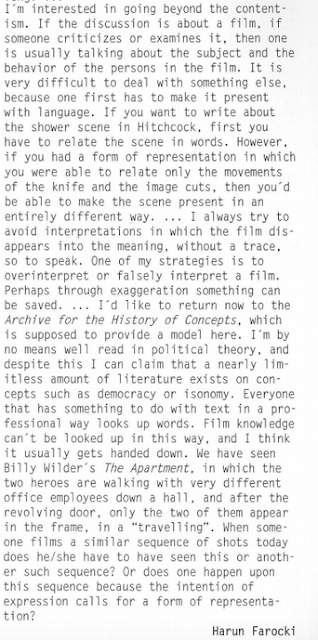
“A contribution of this type aims at sharpening the consciousness of language, and surely there should be something similar to educate the consciousness of cinematic language! I’m mainly concerned that the texts in this archive find their reason purely within themselves, those that don’t derive their right to exist from a system. And so, my first contribution to this imagined archive was Workers Leaving the Factory, and the second The Hands and their Meaning, 1997. Presently, I’m working on a third contribution. I want to do something on prisons: how does the prison appear in film?” HF


https://drive.google.com/file/d/1p4VkqL_BJthmXPlvyFdwu1RnvAyEf4Y6/view?usp=drivesdk
Diagrammatic imagination


Didi Huberman: the visual & the visible


Eccentric Pedagogy. Artistic Research in Times of Crisis.
Página 97 del manifiesto de la Pedagogía Excéntrica.

Poiesis is a Greek term meaning “to bring forth” or “to create.” More than the production of an object, it describes the emergence of something that did not previously exist. In philosophy, poiesis names the creative act through which the invisible becomes visible and the possible becomes actual. Within artistic research, it can be understood as a mode of inquiry in which thinking and making are inseparable, allowing new forms of knowledge to emerge through artistic practice.

When we examine introductory texts on methods and methodology on artistic research, we can extract a series of activities that are understood as valuable, or at least possible, methods, next to the traditional interviews, observations, surveys, focus groups, or case studies: • making art/design work • observation and drawing (in all forms) • sketchbook/notebook, idiosyncratic notation/symbols • visual diary/self-reflection/personal narrative • critical writing • photography, video, sound • modelling, experimentation with materials • concept mapping, diagrams • use of metaphor and analogy • organisational and analytical matrices, flow charts, storyboards • multimedia/hypermedia applications • modelling/simulations, soft systems • electronic databases, visual and textual glossaries and archives • annotating • expositioning (“ausstellen”) • designing (“entwerfen”) • experimenting • arranging • improvising • installation • staging • inter-action3 • intervention • collective work • composing • modelling • notating • rehearsing • working serially • singing • translating (pgs. 5-6)


Algunas intuiciones de mis propios procesos

Radicality as method


I cannot fix my subject. It is always restless, and reels with a natural intoxicationMontaigne


Media, Gaze and Memory


ANA-ARCHAEOLOGY (Deep time of the media, Zielinski https://archive.org/details/deeptimeofmediat0000ziel)
THE ARCHIVE AS A CRITICAL EVENT

https://fundacionesyconquistas.mx
POETICS OF INFORMATION

The Atlas Group, Walid Raad / Catálogo A, B. Walid Raad
ARCHAEOLOGICAL IMAGINATION
forensics & artistic research

https://drive.google.com/file/d/1CAqSfSIeKw8QRSUC1ySG_idWMLFc7_d8/view
“The ancient Greeks used the word aisthesis to describe that which
pertains to the senses. Aesthetics thus concerns the experience of the world.
It involves sensing – the capacity to register or to be affected, and sensemaking
– the capacity for such sensing to become knowledge of some kind.
The finding or invention of means to achieve such effects is to aestheticise.
Defining aesthetics in this way allows us to derive two other terms:
hyper-aesthetics , which we consider to be the augmentation and elaboration
of such experience, and hyperaesthesia , which we consider to be the state in
which experience overloads or collapses, and, as a result, sensation stops
making sense.
In this expanded meaning, as a way of sensing the world, aesthetics does
not exclusively refer to a property or capacity of humans. It equally refers to
other sensing organisms, such as animals and plants, which themselves
apprehend their environment. Further, we argue that sensing is also found in
material surfaces and substances, on which traces of impact or slower
processes of change are registered, including in digital and computational
sensors, which themselves detect, register and predict in multiple novel
ways.” (p. 33).
Huffschmid, Anne (2020). The Human Remains. Forensic Landscapes and Counter-Forensic Agencies in Violent Presents – The Mexican Case. Alemania: Deutsche Stiftung Friedensforschung.
https://drive.google.com/file/d/1ev6Te58Sf1KkO6mi6P1XcqSfImD-epv1/view
Wizeman and Fuller, Investigative Aesthetics. Conflicts and Commons in the Politics of Truth; On Forensic Architecture, conversation with Eyal Wizeman
Forensic Landscapes: notas de arte 1, 2, 3, 4
CARTOGRAPHY


Transposiciones, with Julieta Gil (vid 1, vid 2, vid 3)
ARCHIVAL CHOREOGRAPHIES


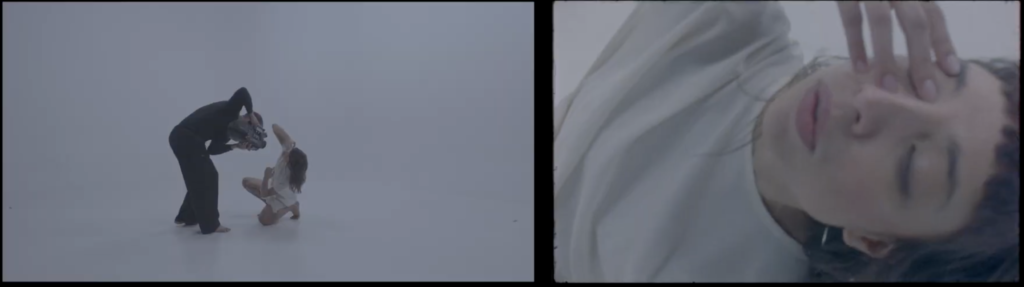
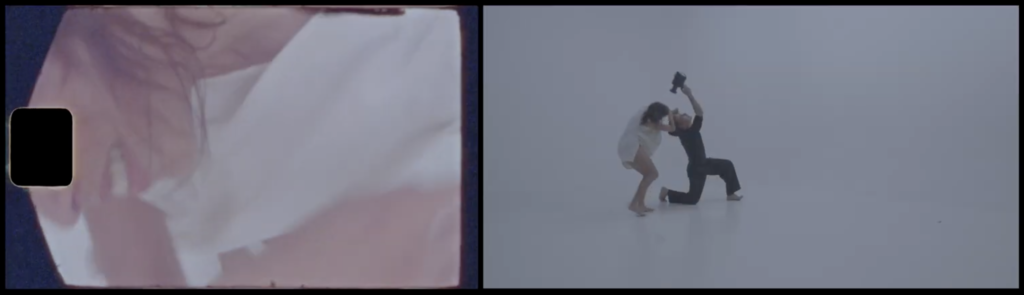
SPECULATIVE POSITIONING

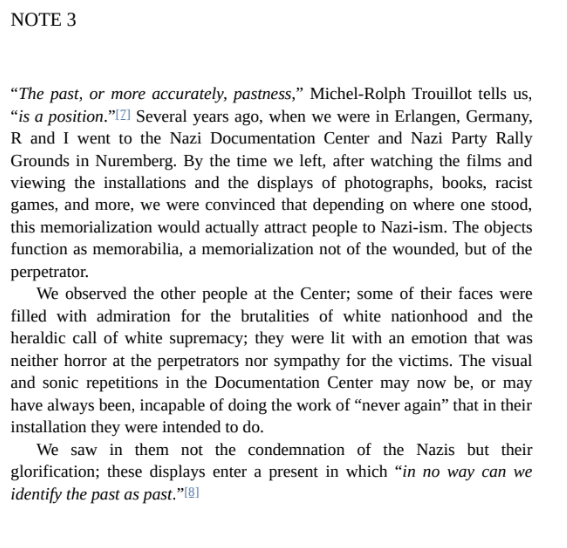




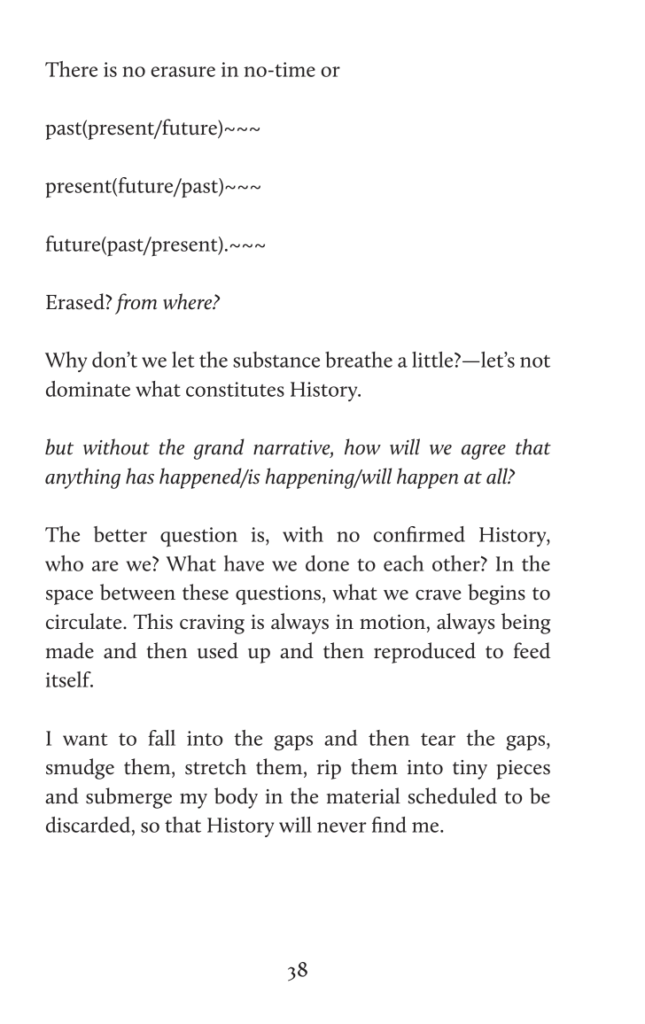
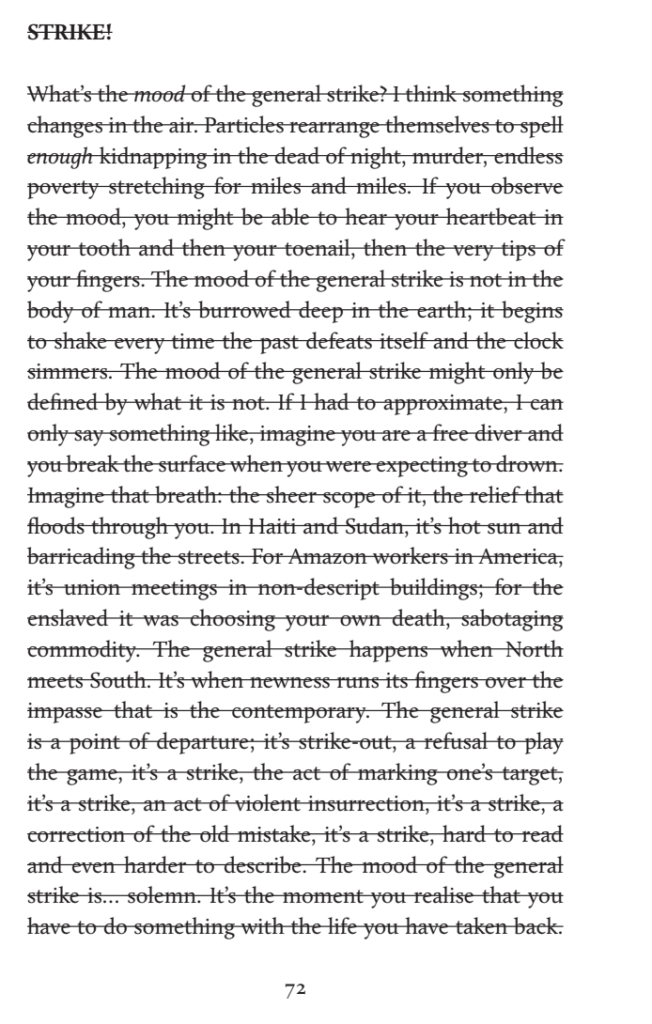



https://drive.google.com/file/d/1gdjnE2TSJG1lP3XhstP0csoFFV0e8JbR/view?usp=sharing


FINAL NOTES AND CONCEPTS
- Derrida: the archive exists in a tension between order and disorder.
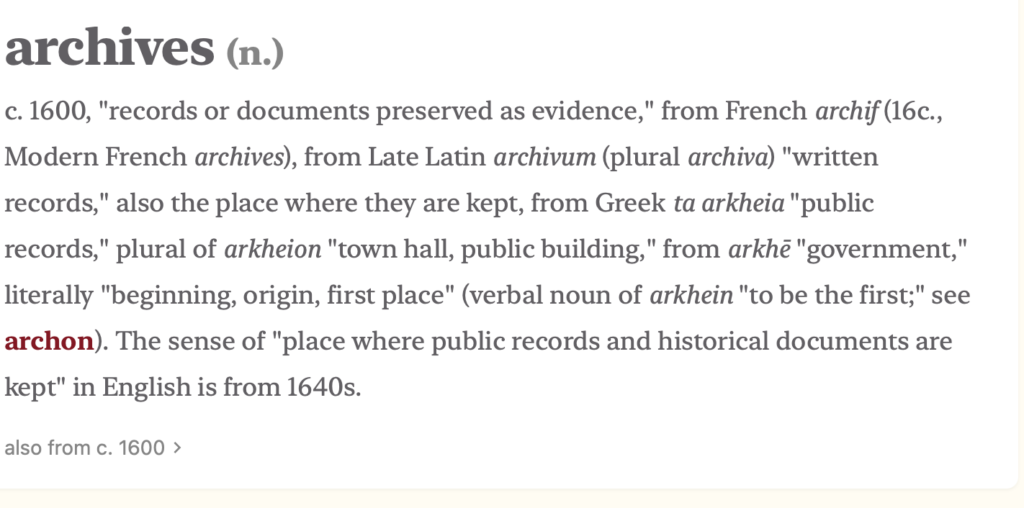
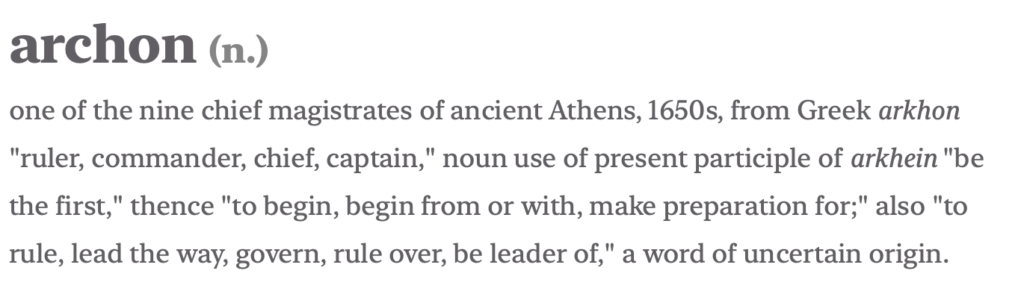
- Arkhé: the place of origin; the normative principle.
- Triangle: chest (arkheion) – law – place.
- Witness – truth, temporal paradigm, privilege.
- Imprints – traces – documents.
- Processes of recording and inscription onto supports; matter and technique.
- Archaeology – Foucault: historical a priori; “given” statements; facts and things.
- Systems of relations configure the archive, defining both its possibilities and its impossibilities.
- Constant tension between preservation and erasure.
- Memory as both mystery and ministry (institutional authority).
- Constituent / instituting violence.
- Potential history and the archive as a site of the event.
- Missing images—documents, movements, events, relations, alternative models.
- The incompatibility of the past.
- History is always potential.
- Imagination, intervention, transmission.
- The archive and horizons of world-making.
Building an Archive of One’s Practice
The documentary horizon of our artistic production requires a normative framework and a system of organization. It is necessary to design an architecture for documentary practice, primarily through the recataloguing of materials according to the needs of our projects. This process can begin with thematic research. Thematic research investigates both the content and the form of our media practices.
Creative Strategies for Working with Archives
- Recataloguing
- Juxtaposition of documentary temporalities
- Repetition
- Re-capture
- Multi-register intervention (visual, sonic, tactile, etc.)
- Cropping / multiplication / splitting of the document
- Intertextuality
- Transfer across media and supports
- Processing
- Variations in speed and texture
- Inking / tinting
- Erasures
- Altering the conditions of the support
- Physical intervention on the material
- Digital processing
- Decomposition / alteration of the support
- Error
- Relocation / recontextualization
Types of Documents and Operational Dimensions
Documentary Horizon
(One’s own or someone else’s archive)
- Locating documentary materials.
- Rules of access and use.
- Possibilities for appropriation, intervention, and dissemination, including legal rights and material conditions.
According to Their Support
- Materialities.
- Temporalities.
- Technical and discursive dimensions.
Conditions
- Material conditions.
- Political conditions.
Codes and Languages
The codes, conventions, and languages through which documents produce meaning.
ARTISTS SHARED BY PARTICIPANTS
https://www.kalilawadimnaexhibit.com/about-kalila-wa-dimna
https://www.photographyinflux.ro/po_item/andrei-nacu/
https://www.andreinacu.ro/index.php/project/-whose/
https://zeitgeschichte-online.de/film/russia-1985-1999-traumazone
https://www.sixpackfilm.com/en/catalogue/2939
https://m.encyclopediedelaparole.org/en/productions/suite-ndeg4
https://forensic-architecture.org
https://dafilms.com/director/9228-adela-babanova