
Investigación-producción
Maestría en cine documental, Escuela Nacional de Artes Cinematográficas, UNAM
Dr. Pablo Martínez Zárate, Mtro. José Navarro Noriega
Presentación del curso
Este curso propone un laboratorio de investigación, experimentación y producción orientado al desarrollo de una mirada documental propia. A partir de la revisión crítica de obras documentales, ensayísticas, experimentales y artísticas, las y los estudiantes explorarán distintas formas de aproximarse a la realidad, construir preguntas de investigación y desarrollar estrategias audiovisuales acordes con sus proyectos de maestría.
A lo largo del semestre, el curso combinará la discusión de referentes, la revisión colectiva de materiales en proceso, ejercicios de experimentación y el acompañamiento cercano de los proyectos individuales. Se entenderá la investigación como una práctica creativa que atraviesa todas las etapas de realización y que involucra procesos de observación, escucha, relación, imaginación, registro, montaje y reflexión crítica.
El curso pondrá especial atención en la construcción de una voz autoral situada, en las dimensiones éticas, estéticas y políticas de la representación documental, así como en la exploración de metodologías y dispositivos de trabajo que permitan a cada estudiante encontrar formas propias de investigar y crear.
De manera complementaria, las y los estudiantes trabajarán la escucha consciente mediante el análisis de diversas prácticas sonoras y audiovisuales, revisando el papel del sonido y la música en el cine y desarrollando ejercicios que contribuyan a perfilar las búsquedas sonoras de sus respectivos proyectos.
Objetivos del curso
El curso busca que las y los estudiantes exploren y desarrollen una mirada documental propia mediante procesos de investigación, experimentación audiovisual, revisión crítica de obras y producción de materiales vinculados a sus proyectos de maestría.
A lo largo del semestre, el seminario funcionará como un laboratorio de investigación-creación en el que cada estudiante pondrá a prueba preguntas, métodos, dispositivos, estrategias narrativas y formas de representación para construir una voz autoral situada frente a los temas que investiga.
A través de la discusión colectiva, la revisión de materiales en proceso, el análisis de obras documentales y artísticas, así como la realización de ejercicios individuales y colectivos, las y los estudiantes desarrollarán herramientas conceptuales, metodológicas, estéticas y éticas para fortalecer sus proyectos de investigación y creación documental.
Metodología del curso
- Revisión crítica de obras documentales, experimentales, ensayísticas, sonoras y artísticas.
- Desarrollo de una mirada documental propia mediante ejercicios de observación, escucha, investigación y experimentación.
- Presentación periódica de materiales en proceso.
- Ejercicios individuales y colectivos de experimentación.
- Bitácora permanente de investigación-creación.
- Tutorías y discusión colectiva de proyectos.
- Exploración continua de la relación entre investigación, creación y pensamiento crítico.
- Integración del sonido y la música como herramientas de investigación documental.
- Producción constante de materiales vinculados a los proyectos de maestría.
Ejercicios del semestre
- Bitácora audiovisual de observación y escucha.
- Diseño y puesta en práctica de una metodología personal de investigación.
- Pieza sonora documental o ensayo sonoro breve.
- Constelación audiovisual realizada a partir de materiales de investigación.
- Entrega final: Carpeta de investigación-creación y prototipo audiovisual del proyecto de maestría.
Planeación Semanal
Semana 1 — Presentación del curso
- Presentación general del seminario.
- ¿Qué es una mirada documental?
- ¿Qué significa escuchar documentalmente?
- Investigación, creación y producción de conocimiento.
- Presentación de los proyectos de investigación de las y los estudiantes.
Semana 2 — Punto de vista y escucha situada
- ¿Desde dónde miramos?
- ¿Desde dónde escuchamos?
- Punto de vista y posición documental.
- Dimensiones éticas, estéticas y políticas de la representación.
Semana 3 — Observación y escucha
- La atención como herramienta de investigación.
- Prácticas de observación.
- Prácticas de escucha.
- Análisis de obras documentales, audiovisuales y sonoras relacionadas con los proyectos del grupo.
Ejercicio 1
Bitácora audiovisual de observación y escucha.
Semana 4 — Investigación como práctica creativa
- Investigación artística.
- Preguntas de investigación.
- Intuiciones.
- Obsesiones.
- Problemas de investigación.
- Construcción de una mirada documental propia.
Semana 5 — Metodologías documentales
- Observación.
- Escucha.
- Deriva.
- Archivo.
- Entrevista.
- Cartografía.
- Correspondencia.
- Investigación encarnada.
Semana 6 — Personajes y relaciones
- Construcción del campo de investigación.
- La entrevista como espacio de escucha.
- La construcción de vínculos.
- La buena pregunta.
Ejercicio 2
Diseño y puesta en práctica de una metodología personal de investigación.
Semana 7 — Escuchar el mundo
- La escucha como método.
- Escucha profunda.
- Paisaje sonoro.
- Escucha documental.
- Prácticas de registro sonoro.
Semana 8 — Sonido, silencio y espacio
- Sonido, ruido y silencio.
- Ambientes.
- Texturas.
- Voces.
- Espacios acústicos.
- El silencio como recurso expresivo.
Semana 9 — Música y documental
- Elementos esenciales de la música y sus diversos sistemas de creación.
- Músicas del mundo: elementos comunes y diferencias.
- Relaciones entre música, sonido e imagen en el cine documental.
- Análisis de estrategias sonoras en obras documentales contemporáneas.
Ejercicio 3
Pieza sonora documental o ensayo sonoro breve.
Semana 10 — Archivo y memoria
- El archivo como material de creación.
- Memoria.
- Documento.
- Huella.
- Apropiación.
- Archivos personales, familiares e institucionales.
Semana 11 — Montaje como investigación
- Montaje como forma de pensamiento.
- Asociación.
- Constelación.
- Ensayo.
- Estructura.
- El montaje como proceso de investigación y descubrimiento.
Semana 12 — Formas documentales contemporáneas
- Documental observacional.
- Documental performativo.
- Documental ensayístico.
- Documental experimental.
- Formas híbridas.
- Cine expandido.
- Instalación.
- Prácticas transmedia.
- Otras formas de investigación-creación.
Ejercicio 4
Constelación audiovisual realizada a partir de materiales de investigación.
Semana 13 — Desarrollo de proyectos
- Revisión integral de proyectos.
- Metodologías.
- Materiales.
- Dispositivos.
- Estrategias formales.
- Discusión colectiva de avances.
Semana 14 — Laboratorio de producción
- Laboratorio de montaje, sonido y estructura.
- Revisión de materiales.
- Tutorías colectivas.
Semana 15 — Presentación final
- Presentación final de procesos.
- Discusión crítica de proyectos.
- Perspectivas para el desarrollo de la investigación y la creación en el segundo semestre.
Entrega final
Carpeta de investigación-creación y prototipo audiovisual del proyecto de maestría.
Materiales a revisar a casa
Material 1 (en clase): Fuego Inextinguible, Harun Farocki.
Material 2: Obreros saliendo de la fábrica, Harun Farocki (link a, link b). Lectura: Obreros saliendo de la fábrica (disponible en estos dos libros de Farocki: Crítica de la mirada, Desconfiar de las imágenes).
Material 3: Ariella Azoulay, Historia potencial y otros ensayos. Leer capítulo 1 o 2 a libertad. Opcional, ver películas de Azoulay hay varias en Youtube).
Material 4: Lecturas sobre imaginación forense: https://drive.google.com/file/d/1CAqSfSIeKw8QRSUC1ySG_idWMLFc7_d8/view, https://muac.unam.mx/publicacion/forensic-architecture
Materiales para las sesiones
Introducción a la investigación artística


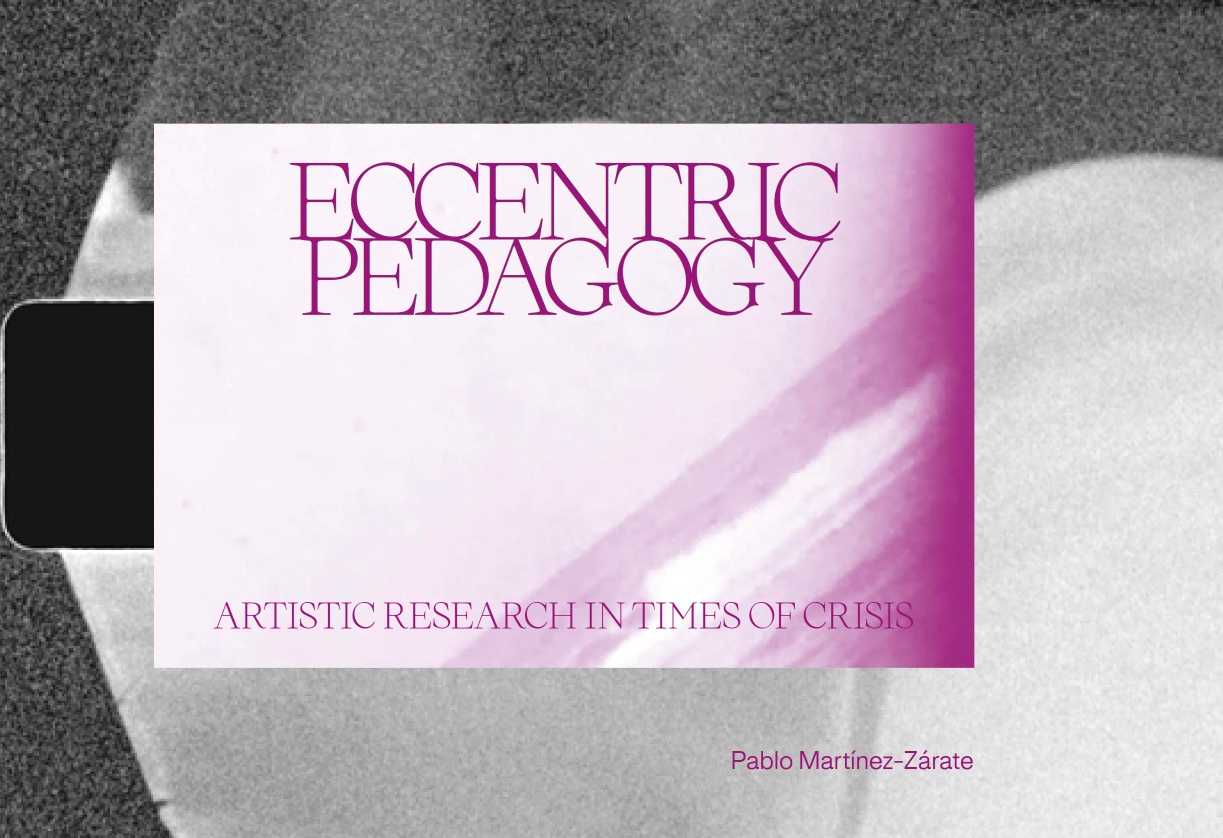
Página 97 del manifiesto de la Pedagogía Excéntrica.

DICE GOOGLE:
“Poiesis es una palabra griega que significa “creación” o “producción”. Se deriva de la palabra poieō, que significa “hacer” o “crear”.
En filosofía, la poiesis se refiere a todo proceso creativo, como la capacidad de un artista de convertir el no-ser en ser. También se puede entender como una forma de conocimiento y como una forma lúdica.
En la teoría estética, la poiesis se refiere a la capacidad generatriz de un artista, que logra traducir el caos poético en formas que pueden ser manifestadas. “

When we examine introductory texts on methods and methodology on artistic research, we can extract a series of activities that are understood as valuable, or at least possible, methods, next to the traditional interviews, observations, surveys, focus groups, or case studies: • making art/design work • observation and drawing (in all forms) • sketchbook/notebook, idiosyncratic notation/symbols • visual diary/self-reflection/personal narrative • critical writing • photography, video, sound • modelling, experimentation with materials • concept mapping, diagrams • use of metaphor and analogy • organisational and analytical matrices, flow charts, storyboards • multimedia/hypermedia applications • modelling/simulations, soft systems • electronic databases, visual and textual glossaries and archives • annotating • expositioning (“ausstellen”) • designing (“entwerfen”) • experimenting • arranging • improvising • installation • staging • inter-action3 • intervention • collective work • composing • modelling • notating • rehearsing • working serially • singing • translating (pgs. 5-6)


Algunas intuiciones de mis propios procesos


Toma de postura


Corte es…


Lectura en clase: La escritura como montaje, Pablo MZ.
Escribir es un acto de ocupación del mundo. Hacer visible el aliento, dar cuerpo a la voz, intervenir el curso del relato histórico. Escribir es hendir el tiempo al introducir nuestra mirada en el horizonte común —es reconocimiento de uno mismo y de la otredad—. Escribir no solo es usar el lenguaje escrito: escribir es tejer sentido con todas las herramientas que la sensibilidad e inteligencia humana tienen al alcance. En el proceso de la investigación artística la escritura deviene inevitable. Se introduce siempre de un modo u otro, con mayor o menor estructura, en uno u otro o casi siempre— varios soportes. En su condición de espejo, permite visualizar las ideas y ordenar su participación en un cuerpo de obra.

Sitio de enunciación: ocupar el mundo para cuestionar la mirada. No sólo se trata de abrir los ojos, sino de cerrarlos. O puesto de otro modo, abrir los ojos a los modos en que abrimos los ojos – y las formas en que ese abrir de ojos es también un cerrar. ¿Qué dejamos de mirar cuando abrimos los ojos de cierta manera?

“In recent years, I have a hard time judging all these digital images and all these codecs that are coming up. I don’t know what to say about colour correction, because it no longer looks like a photographic image, it’s more like a chalk painting, it has no luminiscence. So there are a lot of changes that have confused me in my aesthetic judgment about how I would like to have an image or whatever. But that’s also liberating, because you must question your standards again, and that is what I’m trying to do” HF, 2014
Farocki nunca se conformó con los sistemas de producción fílmica. El cine, desde su juventud, fue una modalidad del pensamiento crítico y la acción política.
Podríamos intuir que la obra de Farocki es también pensamiento y acción.
Entendimiento de la creación como opuesto a la mera Representación
— ¡Muerte a lo real!, ver en Eccentric Pedagogy. Artistic Research in Times of Crisis.
ALGUNAS INTUICIONES RELATIVAS A ESTA PRIMERA OBRA QUE PERMANECEN EN FAROCKI:
– Repetición y diferencia
– Sistemas de producción (e imaginarios)

Obreros saliendo de la fábrica (1995)
“Factories have not attracted film, rather they have rejected it. If we line up 100 years of scenes of people leaving factories, we can imagine that the same shots have been taken over and over again within these 100 years. Like a child who repeats its first word for 100 years, to immortalize its pleasure in that first spoken word. Or like far eastern artists who repeatedly pain the same picture until it is perfect and the artist can enter the painting. When we could no longer Beleive in such perfection, film was invented” HF

“While I was looking for a way to order my collection of material , I thought of the dictionaries, which provide chronological evidence of the usage of a word or expression and then I noticed that there’s nothing that could correspond to a dictionary for film. What should it be called, this thing I was missing? One could ca ll it an “image book”, one could perhaps call it a “thesaurus” or an “image treasury”. one could al so perhaps call it an “archive for cinematic expressions”.” HF

“A contribution of this type aims at sharpening the consciousness of language, and surely there should be something similar to educate the consciousness of cinematic language! I’m mainly concerned that the texts in this archive find their reason purely within themselves, those that don’t derive their right to exist from a system. And so, my first contribution to this imagined archive was Workers Leaving the Factory, and the second The Hands and their Meaning, 1997. Presently, I’m working on a third contribution. I want to do something on prisons: how does the prison appear in film?” HF


Cierre de Fuego Inextinguible:
62. WORKER: I’m a worker and I work in a vacuum-cleaner factory. My wife could use a vacuum cleaner.
63. WORKER: That’s why I take one part with me every day. At home I want to put together the vacuum cleaner, but no matter what I do, it always turns into a submachine gun.
65. STUDENT: I’m a student, and right now I work at a vacuum-cleaner factory, but I think that the factory is making submachine guns for the Portuguese. But we could really use some proof.
66. STUDENT: That’s why I take one part home with me every day. At home, I want to put the gun together, but no matter what I do, it always turns into a vacuum cleaner.
68. ENGINEER: I’m an engineer and I work for an electrical corporation. The workers think we’re making vacuum cleaners. The students think we’re making submachine guns. This vacuum cleaner can become a useful weapon. This submachine gun can become a useful household gadget.
69. ENGINEER: What we manufacture depends on the workers, students and engineers.
THE EXPRESSION OF HANDS (1997)

La iteración como estrategia compositiva (re-compositiva) / Recombinatorias de la imagen — práctica transmedia como necesidad del pensamiento
IMAGINACIÓN DIAGRAMÁTICA

El diagrama, en Guattari, revela no sólo la idea (como sucedía con Pierce) sino la operación de la idea. Es decir, los diagramas revelan las máquinas que sostienen las modalidades del pensamiento y el sentir.

https://drive.google.com/file/d/1p4VkqL_BJthmXPlvyFdwu1RnvAyEf4Y6/view?usp=drivesdk
Cómo vemos (1986)

Podemos percibir distintas estrategias de montaje que van del empalme (Eisenstein, Vertov) al desempalme (Peleshian), de la cercanía a la distancia

Imágenes del mundo e inscripciones de la guerra (1989)
“Human beings must lear anew to recognize the pattern of the earth from the perspective of the air” HF
“Despair, and a heroic courage, made out of these numbers, a picture” HF
Reenmarcar como un acto de intervención política
Describir como un acto de insistencia política, como una posibilidad de fracturar la imagen
Inversión del relato histórico
— storytelling – historytelling – themstorytelling (PMZ, 2023)

Naturaleza muerta (1997)


“La imagen está siempre entre dos campos de fuerza, condenada a ser testigo de una cierta alteridad y, aunque posea un núcleo duro, siempre le falta algo. La imagen siempre es más y, al mismo tiempo, menos que sí misma” Serge Daney
George Didi-Huberman / lo visible vs. lo visual / búsqueda de síntomas

Poética de la información


Investigación temática y diseño modular

“La investigación temática, que se da en el dominio de lo humano y no en el de las cosas, no puede reducirse a un acto mecánico. Siendo un proceso de búsqueda de conocimiento, y por lo tanto de creación, exige de sus sujetos que vayan descubriendo, en el encadenamiento de los temas significativos, la interpretación de los problemas” (Freire, 1970: 134).
“La síntesis cultural no niega las diferencias que existen entre una y otra visión sino, por el contrario, se sustenta en ellas. Lo que sí niega es la invasión de una por la otra. Lo que afirma es el aporte indiscutible que da una a la otra” (Freire, 1970: 239).




Introducción: el archivo como acontecimiento
Derrida: el archivo está en una tensión entre el orden y el desorden.
Arkhé – lugar de inicio – normativo
Triángulo: arcón, ley, lugar
Testigo- verdad, paradigma temporal / privilegio
Improntas – huellas —-documentos
Procesos de registro e inscripción sobre soportes / materia-técnica /
Películas:
Ñores (sin señalar). Annalisa Quagliata, 2016.
¡Allá vienen! Ezekiel Reyes, 2017.
Arqueología – Foucault – apriori histórico / enunciados “dados” / hechos y cosas
Sistemas de relaciones configuran el archivo, sus posibilidades e imposibilidades
Tensión constante entre la preservación y la borradura
La memoria como misterio y como ministerio
Violencia constituyente / instituyente
Historia potencial y sitio de acontecimiento
Imágenes faltantes – documentos, movimientos, hechos, relaciones / modelos otros /
La incompatibilidad del pasado
La historia siempre será potencial
Imaginación, intervención, transmisión.
Archivo y horizontes de mundo.
Construir un archivo de obra
El horizonte documental de nuestra producción exige una normativa, una reglamentación. Es necesario diseñar una arquitectura de la práctica documental, principalmente a partir de la recatalogación del material para los fines de nuestros proyectos. Esto se puede hacer desde la investigación temática. La investigación temática ahonda tanto en el fondo como en la figura de nuestras formas mediáticas.
Estrategias de creación con archivo:
recatalogación
yuxtaposición de tiempos documentales
repetición
recaptura
intervención multi-registros (visuales, sonoros, táctiles, etc.)
recorte / multiplicación / desdoblamiento del documento
intertextualidad
transferencia entre soportes
procesamiento
variaciones de velocidad / textura
entintado
borraduras
modificar condiciones del soporte
intervención sobre material
procesamiento digital
descomposición / alteración del soporte
error
relocalización
Tipos de documentos y dimensiones operativas:
– Horizonte documental (propio o ajeno) – localización – reglas de acceso y uso / posibilidades de apropiación, intervención y difusión de los materiales (incluyendo derechos y materialidades)
– Según su suporte: materialidades, temporalidades (niveles técnico y discursivo)
– Condiciones: material o política.
– Códigos / lenguajes.
OTRAS REFERENCIAS: https://docs.google.com/presentation/d/1kJSt5JjBfvV50s9eyw8VUXfT03Zj2bCTUdbR_jxRB4Y/edit?usp=sharing
IMAGINACIÓN FORENSE
“To investigate is to track movements, to disentangle the making of a situation, to work our the genesis of an incident” (107)
“If aesthetics is about sensing and making sense, its pairing with investigation is a demand for a reworking and heightening of the aesthetic sensorium” (108)
“The investigative mode is based upon a variant conception of truth and promotes a slightly different process of discovery to the stratigraphic one” (109)
“The investigative mode does not simply distrust a photograph, bur dives into the way it is encoded, compressed, formated, seeking to augment what can be seen in it” (109)
“Investigative tools may also sometimes be the means by which power both operates and can be confronted” (110)
“carching truth formation in motion”
“Investigation works with techniques that arre able to move across technologies, languages, ideas, economies, architectures, substances, representations and so on” (111)
“An investigation, like any perspectival operation, is constructive in that it shapes its relation to what i looks at, or what it understands by looking. It is constitutive because in making an investigation, in proposing new conditions of knowing, seeing and doing, it engenders the possibility of , or these things and thus puts in play the capacity to experiment with reality formation more broadly” (111)
Wizman, Eyal. Prólogo del libro: Álvarez Romero, Ekaterina y Plasencia, Clara (2017). Forensic Architecture: Hacia una estética investigativa. México-Argentina: MUAC-MACBA.
“Al usar la palabra forense, tratamos de revertir la mirada forense e investigar los mismos organismos estatales –como la policía o el ejército– que suelen monopolizarla. Como tal, nuestra labora investigativa tiende a salirse de los límites y los requisitos de procedimiento de los foros judiciales en los que la presentamos. Nuestro propósito es situar los sucesos en su contexto histórico e ir sacando de los detalles microfísicos los hilos más largos –procesos políticos, acontecimientos y relaciones sociales, conjunciones de actores y de prácticas, estructuras y tecnologías– para conectarlos de nuevo con el mundo que los ha hecho posibles” (p. 7).
“La negación no es meramente un discurso retórico –la difusión de contradiscursos o de información falsa, sembrar la duda con respecto a la posibilidad misma de los hechos–, sino también lo físico.” (p. 7).
“Pero la ‘arquitectura’, para nosotros, es, parafraseando a Carlo Ginzburg, ‘no una fortaleza, sino un puerto o un aeropuerto, un lugar desde el que embarcarnos a otras destinaciones’. Como arquitectos, investigadores y activistas, vemos los edificios como sensores políticos, la política como un proceso de materialización y mediatización” (p. 8).

“Nuestra labor tiene también una función que está relacionada con los medios de comunicación. Las ciudades no solo son edificios, son espacios sociales, el hogar de civiles atrapados en el conflicto. Cada vez más, las ciudades se han convertido también en entornos de gran densidad mediática (…)” (p. 8).
“El encuentro entre la arquitectura y la ciencia forense supone un reto para ambas disciplinas. Mientras que la arquitectura añade un método de investigación esencial al presente político, la ciencia forense exige que el arquitecto dispense la máxima atención a la materialidad del entorno edificado y a cómo este aparece representado en los medios. Asimismo, nos desafía a realizar públicamente análisis arquitectónicos en los foros políticamente más hostiles. En este sentido, allí donde la arquitectura dirige la atención de la ciencia forense a los edificios y ciudades, la ciencia forense convierte a la arquitectura en una práctica investigativa, en un modo de indagación probatorio del presente mediante su materialización espacial” (p. 9).

“Que ‘produzcamos’ nuestros hechos no significa que nos los inventemos. De hecho, esta es la paradoja inherente a la práctica de reconstruir los actos de violencia y destrucción. Una parte de nuestra labor es necesaria para establecer y representar incluso el hecho más básico; al mismo tiempo, sin embargo, para juntar y cruzar entre sí un montón de fragmentos de pruebas diferentes es absolutamente imprescindible que estos hechos se muestren de una manera clara, evidente y fácil de comprender. Los edificios y las imágenes no hablan por sí solos. Para ser efectivas, todas las pruebas necesitan que alguien las presente, las defienda y las movilice. La convicción –tanto en el sentido habitual de creencia arraigada como en el etimológico de un veredicto judicial– no está nunca garantizada, ni siquiera cuando las pruebas, como un edificio, parecen sólidas” (p. 14).
Weizman, Eyal (2016). On Forensic Architecture: A Conversation with Eyal Weizman. En OCTOBER 156, Spring 2016, pp. 116-140, USA: MIT.
“It’s important to make critiques simultaneously personal and systemic, which means to add an investigative-journalistic dimension to theoretical work” (Weizman, 2016, p. 119).
“Producing evidence depends on aesthetics, presentation, and representation” (Weizman, 2016, p. 120).
“(…) seeing is a kind of construction that is also conceptual and culturally conditioned, hence the indispensability of artistic sensibility (…) it is only through aesthetics that we can both perceive and present. Our understanding of aesthetics is both archaic and contemporary; it refers to material perception, not only to human perception. Material aesthetics doesn’t refer to the human sensorium but to the capacity of all material things to sense, to register their proximity to other things and to their environment” (Weizman, 2016, p. 122).
“I think it’s essential for any discussion of political aesthetics to start with materiality, so that we don’t get lost in the solipsistic world of the subject or in endless meditations on the spectator (…) Material aesthetics is the way things relate to one another, because material change depends on all sorts of things around them that these things also record (…) The principle of matter as a strange sensor is the basis of forensic science. Just as a photographic negative records the proximity of objects, other material surfaces” (Weizman, 2016, p. 122).

“To understand the relation, one has to look at common elements and triangulate” (Weizman, 2016, p. 126).
“(…) architecture as a ‘political plastic’ — the product of force-form relations — seeing buildings as the medium through which political and physical forces are slowed into form (…) Forensics poses a fundamental challenge to architecture in demanding attention to its outer limits” (Weizman, 2016, p. 128).
“The key is to synthetize without losing information. Contradictions, mistakes, and lacunae record something important — often the very effect of violence or the presence of trauma and thus the ultimate truth of the event” (Weizman, 2016, p. 129).

“The architecture in forensic architecture could also be understood as the making of forums. (…) For evidence to be heard forums need to be constructed” (Weizman, 2016, p. 132).
“We learned that it’s not enough to address an academic context or a general ‘public domain’, and that to become political we need to think about available civil tools and institutions that can exercise political leverage. This is always a tactical part of a long term struggle. In this context we’re not arguing with or critiquing the occupation. We’re trying to find ways to confront it” (Weizman, 2016, p. 140).

Huffschmid, Anne (2020). The Human Remains. Forensic Landscapes and Counter-Forensic Agencies in Violent Presents – The Mexican Case. Alemania: Deutsche Stiftung Friedensforschung.
“Forensic action of all kinds aims, very roughly speaking at the production and construction of evidence, be it for strictly legal setting, to be presented before a judge or ina trial, or in broader context: it is about evidencing the fact and events that have not been evident (tangible, seeable, sayable) before (…) it is about materializaing and revealing delibererately invisibilized double crime against people’s basic human rights (to life, for instance) and also against evidence itself” (Huffschmid, 2020, p. 12).
Landscape as a strategic field
“Even if we do not intervene as active searchers of forensic anthropologists, we become part of it, and the landscapes becomes part of our imaginary world” (Huffschmid, 2020, p. 14).
“The forensic field is framed by powerful visual cultures, where images actually perform and have to be considered active agents”(Huffschmid, 2020, p. 22).
“photographic images turn into a contact zone with unimaginable realities” (Huffschmid, 2020, p. 23).
Images “actively participate in the creation of its meaning, independent from the possibly good intentions of artists or journalists that circulate these images” (Huffschmid, 2020, p. 24).
“Forensic reconstruction is, or should be, about signifying –assigning meaning and sense to apparently senseless violence but also to seemingly mere scientific or technical procedures. Accordingly, forensic sciences and practices hold narrative potential, I argue, by seeking to reconnect material and shattered traces of bodies, objects and landscapes in order to reconstruct significant stories of human beings, of politics, of violation and memory. These are stories that do not aspire to any totality but rather assume their fragility and highly fragmentary nature – there is so much that might never be known, so many bodies that will remain nameless, so many perpetrators that will never be sanctioned. And yet, forensic narratives may contribute to the expansion of the field of the knowable and, therefore, the imaginable” (Huffschmid, 2020, p. 36).
“One of the most interesting lessons of the narrative process was learning that understanding, might be triggered by elements that are not necessarily textual” (Huffschmid, 2020, p. 40).
“(…) we need research strategies and narratives that are able to subvert this excessive opacity or opaque excess by disconnecting and also reconnecting procedures: one th one hand, dismantling established (visual) discourses on violence, and on the other, associating the dissociated. We may call this, tentatively, work on forensic imagination” (Huffschmid, 2020, p. 40).
Forensic Landscapes: notas de arte 1, 2, 3, 4

The ancient Greeks used the word aisthesis to describe that which
pertains to the senses. Aesthetics thus concerns the experience of the world.
It involves sensing – the capacity to register or to be affected, and sensemaking
– the capacity for such sensing to become knowledge of some kind.
The finding or invention of means to achieve such effects is to aestheticise.
Defining aesthetics in this way allows us to derive two other terms:
hyper-aesthetics , which we consider to be the augmentation and elaboration
of such experience, and hyperaesthesia , which we consider to be the state in
which experience overloads or collapses, and, as a result, sensation stops
making sense.
In this expanded meaning, as a way of sensing the world, aesthetics does
not exclusively refer to a property or capacity of humans. It equally refers to
other sensing organisms, such as animals and plants, which themselves
apprehend their environment. Further, we argue that sensing is also found in
material surfaces and substances, on which traces of impact or slower
processes of change are registered, including in digital and computational
sensors, which themselves detect, register and predict in multiple novel
ways.” (p. 33).

“Sensing is thus only a part of the more complex question of sensemaking. The former is the result of the receptive action of a sensory organ, a material or a system. The latter involves experience and understanding of what is being sensed, a perception and conception, or a world view, if you like.
Making sense involves constructing means of sensing. This can take place through the design and development of technologies and techniques – literally making senses – or of reflections and enquiries into sensing, making sense as reasoning of different kinds. The sense-making aspect of material aesthetics is more complex and always involves relations between substances and organisms. We should also keep an open mind as to whether artificial forms of sense-making might arise.” (p. 34)
“Both sensing and sense-making, then, each necessarily involve a tension with the other. They may even sometimes seek to undo each other.” (p. 34)
“In the unfolding of each sensing entity and process of sensemaking, aesthetics is situated and perspectival. Each particular form of experience has inherently unique aspects that not only shape it but constitute it. This given, aesthetics can also be a collective practice which assembles the multiple varied and sometimes seemingly incompatible situated experiences – of different individuals and groups, of matter and code – into a poly-perspectival rendering of a situation, combining multiple views from within.” (p. 34)
“So aesthetics is an approach that is fundamentally about assembling, and finding the means to recognise, a multiplicity of different forms of sensation.” (p. 35)
“Aesthetics is always relational” (p. 35).
“Communication is not simply about sending signals, but it is about transformative interconnection” (p. 36)
“… to be politicised is to increase one’s ability to be aestheticised to the world” (p. 36).
“Hyper-aesthetics is an expanded state of aesthetic alertness” (p. 37).
“hyper-aesthetics becomes particularly palpable through the incorporation of human sensing within a network of devices that monitor, count and measure” (p. 37).
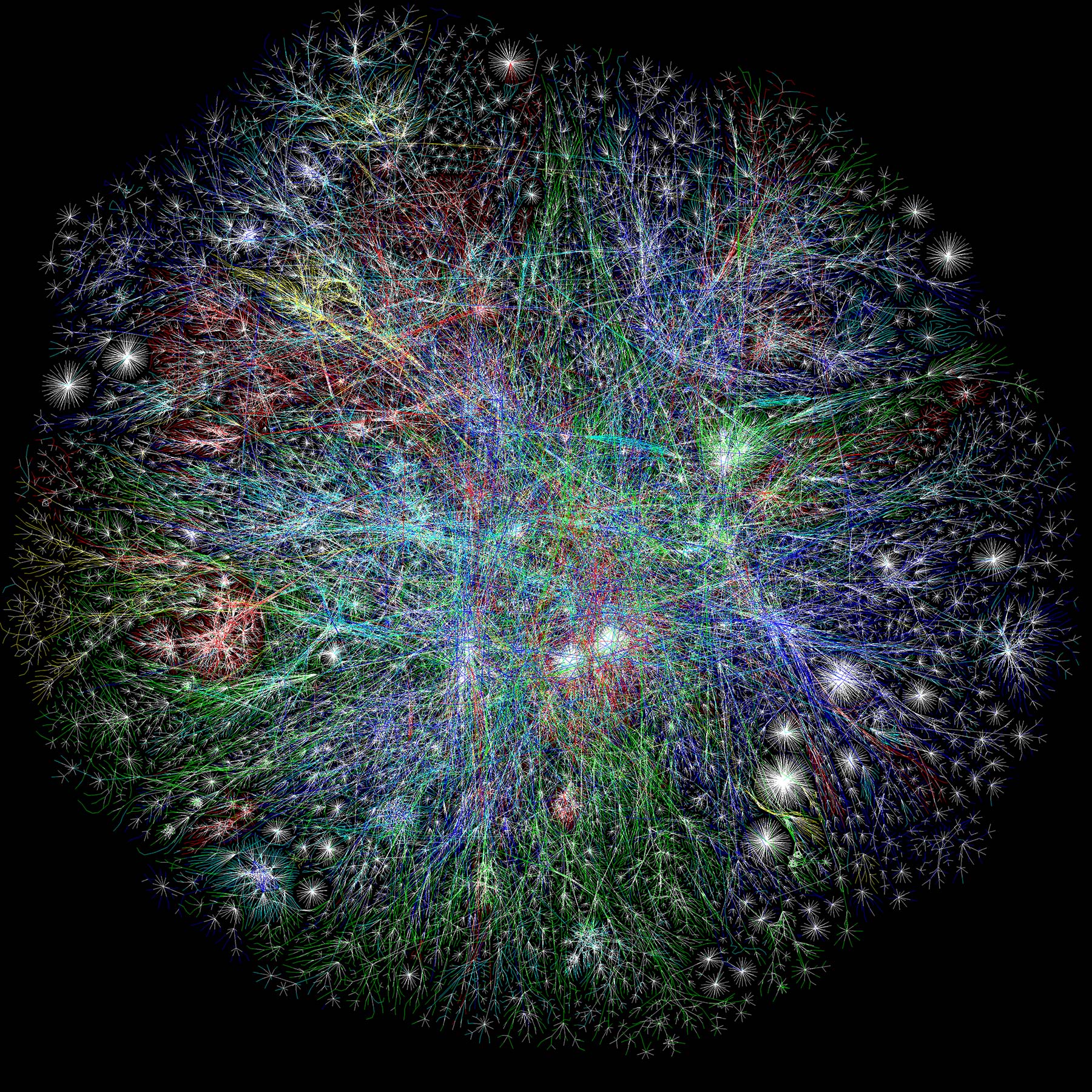
“…a differential regime of aesthetics that defines emerging geometries of domination. Hyper-aesthetics is saturated with new formations of power” (p. 38).
“An important factor in hyper-aesthetics is the way in which different substances – from the most abstract to the most concrete – communicate and share, or competitively and collaboratively, or indeed indifferently, coexist, in sensation” (p. 39)
“investigative commons, or even a common sense” (p. 39).
“…sensing, or being a sensor, is not only a quality inherent to a specific kind of instrument. Rather, it is a name for the activity of all manner of material things that elaborate sensitivities to the thing they come in contact with” (p. 44).
“…it is precisely in differentiation that sensing becomes significant. Sensing is transformation, and patterns of transformation can also be sensed” (p. 46).
“Information should be understood as ‘matter in-formation'” (p. 46).
“To trace patterns in a complex dynamic ecology one must learn to pay attention to tis own aesthetic refrains and variations. To do so in this case, one must recognise the active shaping of the world by plants” (p. 49).
“Aesthetics is understood here as the sensing capacity of entities, which are themselves momentary concretions emerging out of relational forces inherent to matter in various forms, via the remote, proximate or overlapping presence or action of other entities and forces. Sensing is the internalisation, and hence mediation, of environmental conditions into the organisation of an entity. That entity, like most matter and all organisms, is quite likely a composite one, and as something that emerges from and through relations, it is traversed by other entities.” (p. 51)
“All of these terms describe an entity in relation to others, and constitute those entities as a set of interacting relations of different kinds. These elements are mediatic because they contain and express information about their environment.” (p. 51).
“Expressions of code” (p. 53).
“The specific grammars of exposure and relay that each platform adopts and shapes for facets of such a development”
“Aesthetic act” (p. 53).
“Hyper-aesthetics is an expanded and ramified aesthetics, in which both sensing and sense-making are intensified. Hyper-aesthetics increases sensation in three different ways.
First, it amplifies the sensitivity of an entity to detecting the environment around it. The capacity for such attunement is increased in conceptual and material ways. To hyper-aestheticise is to exacerbate the capacity of bodies, technologies or other states of matter to sense, sometimes to record what is sensed, and thus to increase the growth of sense-making experience.
Second, it multiplies and varies the number of ways in which entities act as sensors. This multiplication might entail translation within vertical chains of sensation, for example digital sensors reading and interpreting physical ones. Third, it generates and builds assemblies that synthesise multiple sensations horizontally. While all matter can potentially be read as sensors, the reorganisation of relations between organic and inorganic sensorial matter, people and computers, can increase non-hierarchical sensorial assemblages and even seek to harvest or ‘rescue’ traces from beneath layers of erasure. Hyper-aesthetics is an elaboration of this general condition of aesthetics – its interlinkedness – to a point where it mutates and becomes reflexive. Thus the three articulations of hyper-aesthetics are amplification, multiplication/variation/translation, and synthesis.” (p. 58).
“The assembly of a distributed sensing body becomes a technology in itself. In such a context, an important part of that is counter- or anti-aesthetic strategies, means of escape, evasion and camouflage that may numb hyper-aesthetic capture by dominant powers.” (p. 59).
“To hyper-aestheticise then is to heighten, elicit or exacerbate the capacity of the bodies, technologies or other states of matter to sense and increase perceptual experience; it entails an increase in sensitivity and can perhaps augment a capacity to care” (p. 58).
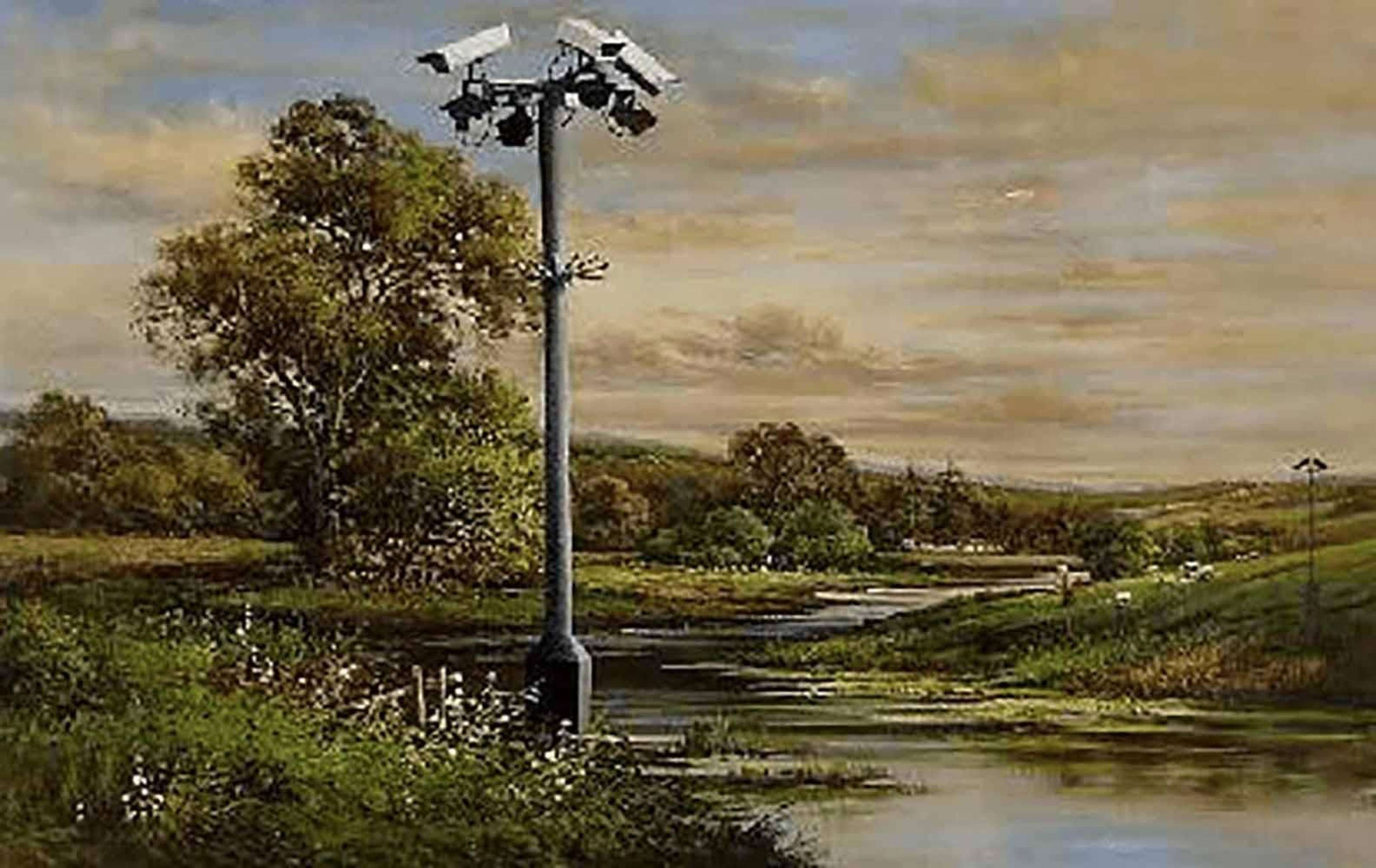
“Here, ‘information’ is never disembodied, but always manifest in and as stuff – ideas, chemicals, media, organisms, photographs and so on – all of which transform and translate these transitions. In turn, information is only ever accessible as information through a means of accessing and filtering it. These means will always have their own perspectivalism. These may be incongruous and asymmetrical to the sources of what is treated as information. This difference creates further information through the very way in which it is translated or incorporated.” (p. 58-59).
“These transformations can be interpreted as an informational change that makes hyper-aesthetics valuable for investigation. Hyper-aesthetics multiplies dimensions of sensing and thus provides routes to its intensification. New channels and gateways articulate and transform the more generalised sensing of aesthetics.” (p. 61).
“Evolving or designing new sensors and capacities of sensation, perhaps in such chains of technologies and organisms, implies constructing new figurations of reality and points of passage from one system of sensing into another.” (p. 62)

“All bodies of matter and all surfaces are exposed to the environment around them; some impressions linger and register, others are erased and get lost.” (p. 63)
“processes of aesthetic refinement” (p. 64).
“As with new aesthetics, hyper-aesthetics is also formed in composition with fields of power” (p. 65).
“Documentary architecture”

“But formations of power, for instance those of a social movement, can also be militant and a hyperaesthetic strategy can also be adopted from this direction. Integrating things, people, organisms, languages into convergent systems of power recalibrates their aesthetic dimension.” (p. 67)
“…to contest the violence of borders, one needs to contest the boundaries of what can be seen and heard, and that to provide evidence of past shipwrecks is also to provide information to help migrants decide upon future strategy.” (p. 69).
“Three other categories of sensing can throw light on hyper-aesthetics: kinaesthesia, synaesthesia and chrono-aesthesia. Kinaesthesia describes awareness of position and movement.” (p. 73).
“The environment itself is a distributed and variegated sensing assemblage, a non-totalised concatenation of sensory fields.” (p. 73).
“Inhabiting an image means accepting the image being of all material surfaces, and one’s own actions, and constitution, within them.” (p. 79).
“To act, to live is to continuously image and be imaged. This changes a substantive thing: the relation between an event and an image is not one of action and its representation, but rather one in which the action of matter, from the most abstract to the most obviously physical, continuously images itself. This state paradoxically suggests that we need to be reading reality as a self-referential image: a meta-image. Here, the image is figured as a sensory trace, or cluster of sensory traces, that in certain perspectival conditions gains a capacity to cohere or perhaps to persist.
But – being material – images have real physical resistance, even when they are encoded data and their material surface, their micro-topography, can take part in and shape an event without going through communicative meaning.” (p. 80).
“Hyperaesthesia describes a neurological condition in which sense perception radically overloads.” (p. 83).
“…erasure is always a form of registration” (p. 84).
“Hyperaesthesia becomes a form of breakage in sense, a blockage in the capacity to make sense” (p. 85).
“A question for aesthetic practices is how to develop or to recognise such hyperaesthesia as a collective event, or as a societal condition” (p. 87).
“Hyperaesthesia can be what reality forces into effect the moment it is no longer possible to reduce such a problem to a set of simpler ones. It occurs in a cognitive system, one that may be biological or programmatic, individual or distributed, at the moment evolved or designed filters and constraints fail to maintain proper levels of sifting and security. (…) hyperaesthesia is also an opportunity, a moment of crisis that allows us to reorganise the field of sensation of the sensible, and its relation to sense-making. In consequence we are calling for a terrain of experimentation. One that develops means of reading, perceiving and connecting sensory modes to aid and sometimes constitute political and cultural interventions.” (p. 88).
Two modes of aesthetic power today: affect & effect
“The extensions of sensing technologies of effect thus tends to provide a ground for the techniques of affect” (p. 93)
“Affect and effect overlay and reinforce each other” (p. 93).
“Prediction and detection are codependent: the power to detect over time enables the calculative capacity to predict” (p. 93).
“Sensitisation is also calculative” (p. 94).
“The surveillance, targeting, adjustment and modulation of human behaviour are perfected through leveraging preference, desire and emotion. Private experience becomes the raw material of predictive behaviour.” (p. 96-97).
“The interwoven manifestation of aesthetic power has a place in the genealogy of state power.” (p. 97).
“Historically, aesthetic power owes its existence to two developments that defined the early twenty-first century – the ‘war on terror’ on the one hand and the development of digital economies and social media on the other.” (p. 97).
“These aesthetic decision-making processes are not open to scrutiny, perhaps in an analogous way to that in which eighteenth-and nineteenth century aesthetics conceived itself as beyond reason and beyond calculation. Each of these stages of translation is aesthetic, but not because they necessarily involve an evaluative judgement of beauty passed through human discretion. These registers are aesthetic because they involve the complex politics of sense and sense-making across contexts that are themselves the result of the ongoing accumulations of such processes. Any challenge to aesthetic power will have to learn to recognise this and come from within the aesthetic field of operation.” (p. 102-103).

“Film director Jean-Luc Godard famously described the interplay between making political films and making films politically. In the former, representations of politics are stored on celluloid. In the latter, the way the film is made, not just what it shows, is subject to political enquiry and reinvention. Following this, we are concerned not only with ways to make political investigations, but also to think about investigation politically. This demands a different response in relation to each of the different sites in which investigations are performed: the field , where incidents happen and where traces are collected; the lab and the studio , where they are processed and composed into evidence; and the forum , where they are presented. Each site requires a different level of participation, a different process by which evidence is worked on and socialised. The community of practice that arises around the process of evidence production is an investigative commons. The investigative commons brings together a combination of aesthetic, political and epistemic structures.” (p. 196)
“In the lab and the studio the commons emerge as sites of the diffuse and collective labour of enquiry forged through composition and invention. In the forum the commons emerges by socialising the presentation of evidence, and finding new locations and platforms where the articulations of political claims can be seen and heard.” (p. 196).

“The formation of common sense can be seen as a mode of creation, the ongoing development of a commonality – built into the creation of knowledge. Indeed, when common sense becomes recognised as a problem of creation, rather than being a repressive set of implicit norms that are taken for granted, it becomes open for reinvention.” (p. 196).
“Unlike the universal’s implication of a norm that it presupposes, the commons is woven together by a multiplicity of differences – of participants, perspectives, situated experiences, positions and forms of knowledge produced and worked at by practical and experimental intersections. It is a shared rather than a unified or unifying condition.
Such an aesthetic commons is not just held in common by people, but is generated ecologically. It is based on the multiplication of what counts as sensoria and sensing. When you unmoor aesthetics from human judgement, other possibilities open up. (…) In such tensile conditions, there are multiple materials – ranging from the biological and mineral to the political and experiential, including mathematical conceptions and computational devices, stretching from base matter to abstract materialism – that together can constitute an aesthetic commons that has consequences for investigation.” (p. 198).
“Such an aesthetic commons is, of course, not just held in common bypeople, but is generated ecologically. It designates a recognition of the ongoing and massively diffused sensing activity of living and inorganic processes. It implies the development of an inquiring disposition towards being with matter, code and organic substances in aesthetic assemblages.” (p. 201)
“The struggle over sense-making has always been as epistemological as it was political. At this point, what we want to say, then, is that reality is a commons, of a certain sort, and at times, one that needs to be fought for, composed with a lot of negotiation, love and skill. Reality is an ontological commons, in that it is all that is there, all that we have got. It is an epistemic commons in that it is what we must use to test what we can know. It is an aesthetic commons in that it accrues out of tension between sensing and limited sense-making.” (p. 201).
“When they delink, when they use an unproven or more fragile part of the network of sense-making to question or dismantle the entire assemblage, when they insist that only they have the privilege of knowing, denial is aimed not at making new sense but at the uncommoning of the commons. Such fissures in the commons must be repaired. When police say they have shot a person legally the commons has to be similarly repaired. When those in charge claim that the destruction of forests by fire is a seasonal event, rather than a consequence of industrial strength greed, social bonds with nature have to be mended. The stakes, thus, of the formation of reality as a commons are thus of many kinds. Nevertheless, such ruptures can also travel in other directions than simply downwards. The reality-formation routines of hierarchical power can also be broken.” (p. 201-202).
“The sustaining and development of this condition creates a commonality” (p. 202).
“The condition of the contemporary world obliges its inhabitants to struggle to recognise and to produce what it is that provides a means of knowing, communicating and thinking. Virno emphasises the creation of societies by those who are not accepted by them, migrants, women, racial and sexual internal outcasts and others such as those who suffer class domination, all of which he calls the multitude. Only those who don’t fit can fully think, and their condition of strangeness is what allows for the struggle to form the commonplaces that partially overcome this condition. Indeed, the common arises, one can say, from a belonging to a sense of nonbelonging.” (p. 204).
public commons / toxic commons / chaotic commons
“Language is inherently a commons, except when it is a secret one, an encrypted code, in that it is necessary that it be used publicly for it to work. For it to continue to work and remain current, it needs to change, and for those changes to be made by those who have the need to use those changes.” (p. 207).
“It is a vastly multidimensional and experiential space which is composed in conflict but also in community, in conformity but also in the brilliance of invention. It is this kind of quality that we want to propose that language has in common with what can be called an investigative commons. Reality, whether we like it or not, is a commons of this sort, being something arising out of a disjointly collective process of work and becoming, one that is, of course, inherently post-human. Studying and discovering, and indeed inventing, the terms of this process are crucial. Finding the ways in which reality as commons can be attended to and discovered also implies wider forms of commons of the kind to which language belongs. Here, an aesthetic commons would consist of the sensing and sense-making processes that make themselves available for other processes of sensing. This aesthetic commons provides a common ground, something that may be negotiated, fought over, niggled at, worn away, or otherwise ‘contributed to’.
In this context, an affirmative understanding of an aesthetic commons follows through as a political understanding of hyper-aesthetics. If hyperaesthetics is a move towards understanding an expanded ecology of sensing and sense-making, then the notion of an aesthetic commons articulates crucial aspects of the collective political stakes of this condition. It is an open form of assembly that includes humans and other living and inorganic matter alongside sensual technologies such as code.” (p. 207).
“These polyphonic networks are uneven and asymmetrical, skewed by different privileges and degrees of access creating difficulties that need to be recognised and worked at. Creating the commons is hard work, but creates a possible foundation for politics, while itself being a form of political action.” (p. 208).
“…the risk of disagreement is an imperative” (p. 208)
“Working within the polyphony of the investigative commons is what sharpens it, renders it able to sense and make sense.” (p. 208).
“Knowledge is pluriversal. The pluriversity suggests an art of the commons working with affordances, and capacities for invention and for becoming that is ecological in its recognition of multiple and interacting processes of formation and intelligence. Earlier, we spoke about direct action as a form of research and learning. To work in this way means to try to make the most immediate – but patient and careful – contact with reality possible and to change it and ourselves in so doing. Direct action, at its most profound, works to recognise the difficult intermeshing of events and understanding. It aims at being immediate and to have effects by recognising and working with mediation.” (p. 210).
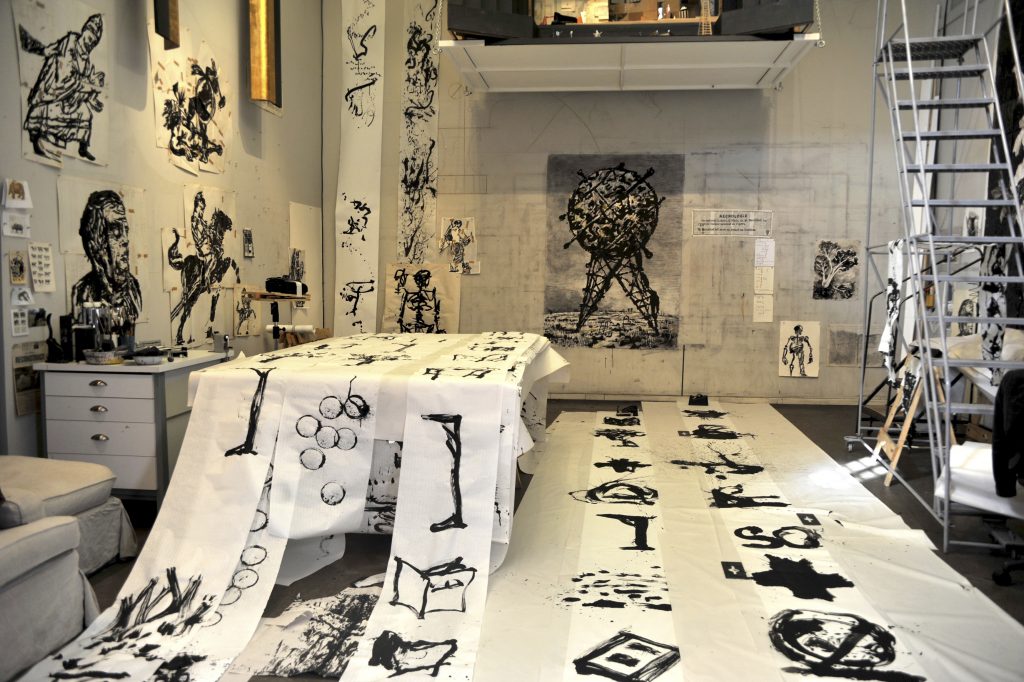
“The lab is the site for the isolation and testing of phenomena according to the strict protocols of scientific practices. The studio sets up a space for elaboration, imagination, composition. It is a kitchen for play, attentiveness, free association and the perverse. Each thus offers infrastructure for different kinds of sense-making and testing of propositions and ideas. Both have their own grammar of action and sometimes develop a different kind of striving for their own independence or conatus. Both are sites where problems and propositions are worked on with a set of internally coherent protocols and with different modes of connection, but also of seclusion.” (p. 213).
“The studio has a longer history than the laboratory. The laboratory proper was founded in the scission of science, or natural philosophy, from a wider configuration that also included art.” (p. 214).
“(…) the lab and the studio have also expanded, as new modes of scientific work and of art and cultural practice developed.” (p. 215).
“Both the lab and the studio have thus become sites of self-reflexive labour. They could be thought of as spaces of differentiation where entities such as images and ideations, physical and organic substances, processes and problems – the things to be investigated – are brought together with concepts, equipment and techniques and those who work on and with them. Both sites entail the work of moving between hypotheses and reality, cultivating attention to reality while constituting it.” (p. 216).
“Indeed, the design and formation of organisations beyond the studio becomes central to forms of culture as collective forms of sense-making. As aesthetic practices more broadly migrate towards being an open field of enquiry that is able to gain and invent forces of sense-making, new organisations that embody and experiment with different diagrams must proliferate. Organisations, indeed, have their own implicit and explicit aesthetic. Their structure, their diagram, constitutes rather than simply and neutrally conveys sense-making processes. This is part of why struggles over institutional forms, such as growing demands for the decolonisation of museums and other cultural spaces, are so urgent. Just as the field, the lab and the studio must undergo mutation, so too must the last domain within which investigative aesthetics is enacted, its sites of presentation, debate and deliberation. These are different kinds of forum , sites of public ritual of truth formation, of institutional sense-making. It too has its own priests who follow their own protocols. Truth claims are performed. Juridical wigs are sometimes worn. Speech acts are enacted, and a determination is reached.” (p. 219).
“As aesthetic practices change, so too do their other associated spaces, such as museums, schools and galleries. To open up problems and events that have been rendered secret, investigative aesthetics rewires relations between such places. In doing so it finds ways of making new kinds of forum, such as collectives and publics.” (p. 220).

Diseño modular:
El principio modular, identificado por Manovich como uno de los “principios de los nuevos medios” (Representación numérica, Modularidad, Automatización, Variabilidad, Transcodificación).
Universo Narrativo: todo el conjunto u horizonte de nuestro discurso, en este caso pedagógico (qué daremos, cómo, dónde)
Módulos Narrativos: cada uno de los bloque o módulos de la experiencia, es decir, las etapas de la experiencia
Unidades Narrativas: los elementos específicos que irán articulando la experiencia en el día a día
Conjunciones (iteraciones): variaciones y despliegues de las investigaciones

